

Also, mistakes corrected in the same year they occur are not prior period adjustments. Don’t forget to record the dividends you paid out during the accounting period. Net profit retained earnings represents refers to the total revenue generated by a company minus all expenses, taxes, and other costs incurred during a given accounting period. When a company consistently experiences net losses, those losses deplete its retained earnings.
- If you see your beginning retained earnings as negative, that could mean that the current accounting cycle you’re in has a larger net loss than your beginning balance of retained earnings.
- Retained earnings can also be used to fund new product launches, like when a stationery manufacturer launches a new variant of an item or launches a new item to strengthen its market position.
- They can boost their production capacity, launch new products, and get new equipment.
- Retained earnings are prominently featured in a company’s financial statements, serving as a bridge between the income statement and the balance sheet.
Account
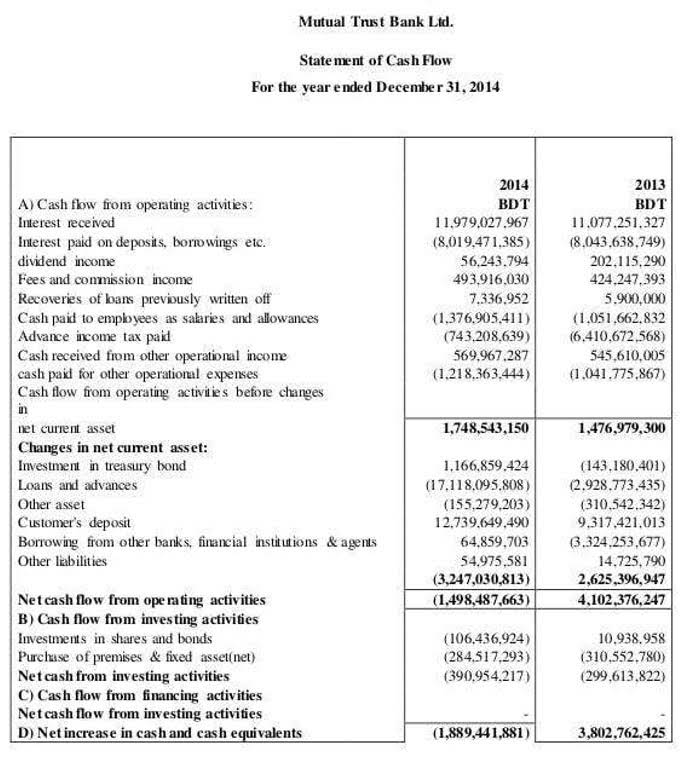
Many companies consider dividend payouts and plan investment strategies at year end. We can help determine what’s appropriate for your situation and answer any lingering questions you might have about your business’s statement of retained earnings. Retained earnings represent the portion of a company’s net income that’s kept (retained) rather than paid out as dividends. It’s a snapshot of how much profit the company has accumulated over time.
What Is the Relationship Between Dividends and Retained Earnings?
On the flip side, holding onto excessive earnings may lead to scrutiny from the IRS for C corporations under federal accumulated earnings tax provisions. This indicates that the company has $28,000 in retained earnings for the current financial period. Companies often use these retained earnings to reinvest in the business, such as through research and development, equipment purchases, or debt reduction. A retention ratio of 75% implies that Company D reinvests three-quarters of its net income into the business, which can lead to significant growth in retained earnings over time.

Retained Earnings and Equity Valuation
It’s time to take the mystery out of this vital financial term so you can make smarter, more informed business decisions. In conclusion, when managing retained earnings, companies must carefully consider their legal obligations and tax implications. By utilizing retained earnings appropriately and transparently, businesses can maintain compliance and make the most of their financial resources. Company A’s ending retained earnings are $650,000, indicating that it has reinvested profits back into the business. Retained earnings appear under the shareholder’s equity section on the liability side of the balance sheet, and often companies will show this as a separate line item.
- A growing business might use retained earnings to finance growth while also reducing debt.
- Retained earnings are also called earnings surplus and represent reserve money, which is available to company management for reinvesting back into the business.
- Management, on the other hand, will often prefers to reinvest surplus earnings in the business.
- In financial modeling, it’s necessary to have a separate schedule for modeling retained earnings.
- To summarise, the total market value of the company should not change, but what should change is the per-share market value, which will decrease.
- Retained earnings are listed under shareholders’ equity, reflecting the company’s accumulated profits.

Retained earnings aren’t just an internal metric—they’re a signal to external stakeholders. If you plan to sell your business or attract investors, a strong retained earnings history can indicate sound financial health and strategic vision. This makes your business more desirable and trusted in competitive markets. Your approach will depend on several factors, including your business stage, shareholder expectations, and anticipated market conditions. For example, a startup may reinvest heavily to gain market share, while a mature company may prioritize steady dividends to maintain shareholder trust. While shareholders appreciate payouts, retaining too little earnings can limit your ability to grow.
Firms that prioritize high dividend payouts may see slower growth in retained earnings, as a substantial portion of profits is distributed to shareholders. This approach can appeal to investors seeking immediate returns but may restrict the company’s capacity for long-term investments. On the other hand, companies that retain a larger share of their earnings can reinvest in research and development, acquisitions, or other growth opportunities, potentially enhancing future profitability. Retained earnings are an essential aspect of a company’s financial health, representing the portion of net income not distributed as dividends but rather reinvested in the business. Understanding how to calculate retained earnings is crucial for business owners, investors, and stakeholders to gain insight into the company’s performance and growth potential. It reflects the accumulation of profits over time that has retained earnings balance sheet not been distributed to the company’s owners.
Are Retained Earnings a Type of Equity?
The beginning period retained earnings are thus the retained earnings of the previous year. Since stock dividends are dividends given in the form of shares in place of cash, these lead to an increased number of shares outstanding for the company. This means each shareholder now holds an additional number of shares of the company. Retained earnings are calculated by adding/subtracting, the current year’s net profit/loss, to/from the previous year’s retained earnings, then subtracting dividends paid in the current year from the same.
- A separate formal statement—the statement of retained earnings—discloses such changes.
- This balancing act between distributing profits and retaining earnings is a delicate one, requiring careful consideration of both immediate and long-term objectives.
- Startups and high-growth companies typically retain a larger portion of their earnings to finance expansion and innovation.
- Retained earnings are calculated by adding/subtracting, the current year’s net profit/loss, to/from the previous year’s retained earnings, then subtracting dividends paid in the current year from the same.
- Any changes or movements with net income will directly impact the RE balance.

Changes in unappropriated retained earnings usually consist of the addition of net income (or deduction of net loss) and the deduction of dividends and appropriations. Changes in appropriated retained earnings consist of increases or decreases in appropriations. Retained earnings, on the other hand, specifically refer to the portion of a company’s profits that remain within the business instead of being distributed to shareholders as dividends. When a company generates net income, it is typically recorded as a credit to the retained earnings account, increasing the balance. In contrast, when a Accounting for Technology Companies company suffers a net loss or pays dividends, the retained earnings account is debited, reducing the balance.
How can beginning retained earnings be calculated if not provided?
It is not uncommon for companies with high retained earnings to also have significant debt, which could impact their overall financial health. Therefore, a careful analysis of a firm’s balance sheet and entire financial situation is necessary. The higher a company’s net income, the more earnings they can contribute to retained earnings.